'Sinful' Christmas
By Fr Frank Hoare
Greeted with hospitality and sweet tea, a Columban priest and his companion tell the story of Christmas to non-Christians in Fiji. This article won a ‘Highly Commended’ award for The Far East, the magazine of the Columbans in Australia and New Zealand where it first appeared in the November-December 2008 issue, from the Australasian Catholic Press Conference in Sydney in September.
‘You have walked all this way to enlighten us about the meaning of Christmas. You are a holy man; you are a saint; you are an incarnation of God’, a middle-aged Fiji-Indian man named Ram Samuj enthused after I had shared with him the story of Christmas. I remembered how Paul and Barnabas had torn their garments in horror when, after healing a cripple, the people of Lystra attempted to sacrifice oxen to them (Acts 14:14). My protestations of mere humanity to Ram Samuj were less dramatic, but he accepted them. No sacrifice was performed.
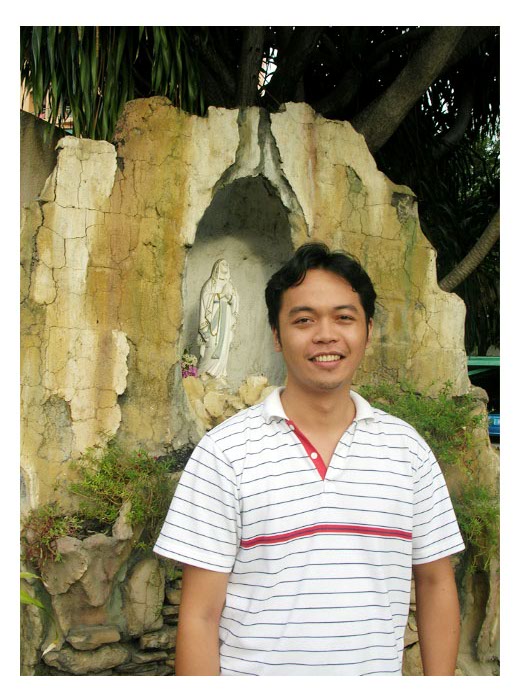 ‘Christi simus non nostri. Perigrinari pro Christo’, I chanted repeatedly as I walked in the dark on my last day towards Agoo. I had been walking for days and sleeping wherever darkness caught me. During the Spiritual Year, the first year of formation, it has become a tradition for Columban seminarians to go on pilgrimage either from Malolos, Bulacan, to Manaoag, Pangasinan, or from Apalit, Pampanga, to Agoo, La Union. Without money, we ask for food and water from the people we meet on our way. At night we also ask around for a place to sleep. We tell people we are on pilgrimage and don’t disclose that we are seminarians unless they ask who we really are. The pilgrimage has always been optional; each of us decides if we will make it or not. We were the sixth batch to go on the pilgrimage.


 ‘Arlenne’, with a prolonged hold on the second syllable, was the way people at home called me when I was a child in order for me to do something. And then it was followed by ‘Marika’ (Come here) if it was my mother who called or ‘Dali diri’ (Come here) if somebody else. I would answer immediately saying, ‘O,’ which meant ‘Yes’, and then went to the person who called me.