Misyon Online - September-October 2015




Rabbi Zalman Kastel, Sheikh Wesarn Charkawi and Fr Patrick McInerney after the Martin Place Siege, Sydney, December 2014
Columban Interreligious Dialogue Website
Recently the Missionary Society of St Columban launched a new website, www.columbanIRD.org, that is devoted to Interreligious Dialogue (IRD). The website describes interreligious dialogue in the words of Nigerian Cardinal Francis Arinze as ‘a meeting of people of differing religions, in an atmosphere of freedom and openness, in order to listen to the other, to try to understand that person’s religion, and hopefully to seek possibilities of collaboration. It is hoped that the other partner will reciprocate, because dialogue should be marked by a two-way and not a one-way movement. Reciprocity is in the nature of dialogue. There is give and take. Dialogue implies both receptivity and active communication.’

ST COLUMBAN, PILGRIM FOR CHRIST
This is the first of two articles on St Columban by a Columban priest who wishes to remain anonymous. The second article will appear in our November-December issue.
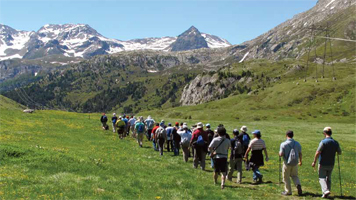 Some years ago when a group of us Columbans were preparing to celebrate Jubilee 2000, we wanted to do something out of the ordinary to mark the occasion. We focused on the idea of a pilgrimage following the footsteps of St Columban. Many of our generation in Britain and Ireland have had an experience of pilgrimage. It may have been our weekly pilgrimage as we walked along the road to the local church for Sunday Mass, doing the stations of the Cross, going to a holy well or journeying to places of devotion like Knock, Walsingham or Lourdes, Fatima, or Medjugorje. Some of us have done the old Celtic pilgrimages; be it climbing Croagh Patrick, or fasting and praying on Lough Derg, even perhaps walking to Santiago de Compostela.
Our Christian life is wrapped up in pilgrimage as we move from birth to death and on to life eternal. As Columban missionaries following our patron’s footsteps across Europe, we rediscovered some important aspects of St Columban’s own understanding of pilgrimage.
MEANDERINGS OF A CATHOLIC MOTHER
By Mira Vanleeuwen
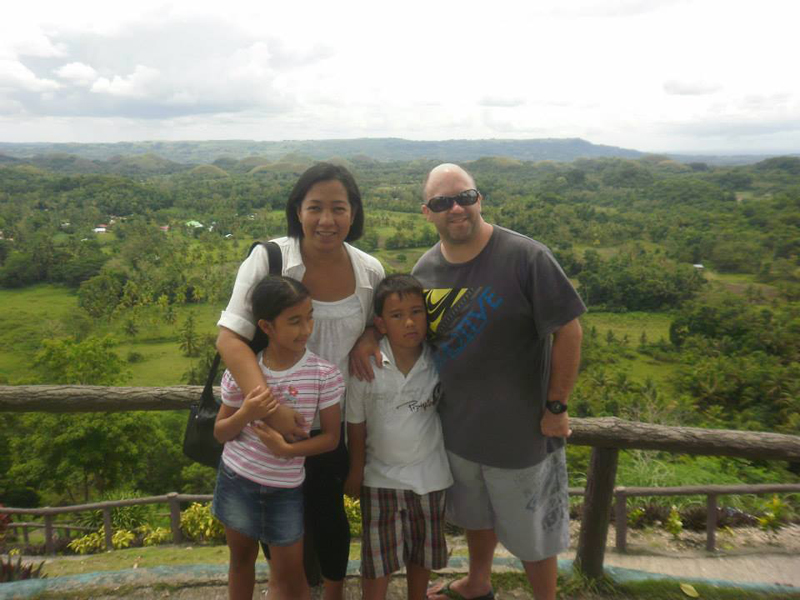
Mira and Family
I share the same birthday as Mama Mary, 8 September. It is something that I always hold dear in my heart, keeping me grounded in my faith no matter what. It’s been very challenging living here in Australia for about ten years now where most people hardly ever go to church. There is a certain concept here that as long as you're doing good you’re not a bad person. You will be all right and you don’t need God. People here are so open to almost anything, and of course they don’t mind things like same-sex marriage, something that greatly challenges my own principles and beliefs.
MYSTIFIED IN THIS ‘SELFIE’ TIME AND AGE
By Fr Richard Escoto OCD
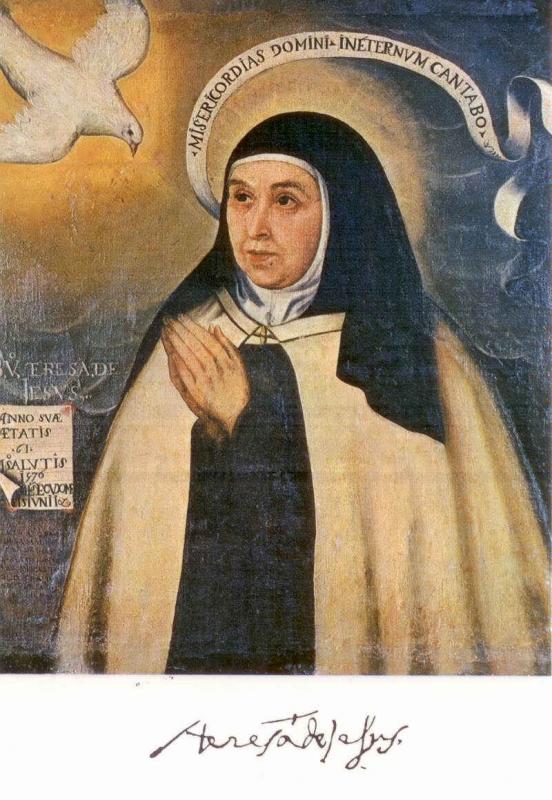
St Teresa of Ávila
‘This is the one portrait of Teresa that is probably the most true to her appearance. It is a copy of an original painting of her in 1576 at the age of 61.’
The author is currently the National Vocation Director of the Order of Discalced Carmelite Friars in the Philippines.
Vocations to the consecrated life are like the internet source. They continue to upload, unload and reload. And they are not running out of reach of a signal, with strong connections always from the source. They are ‘streaming live’.
Such a reality is awe-striking. It leads me to question more.
A JOURNEY AWAY FROM HOME
My Experience on First Mission Assignment
By Erl Dylan J. Tabaco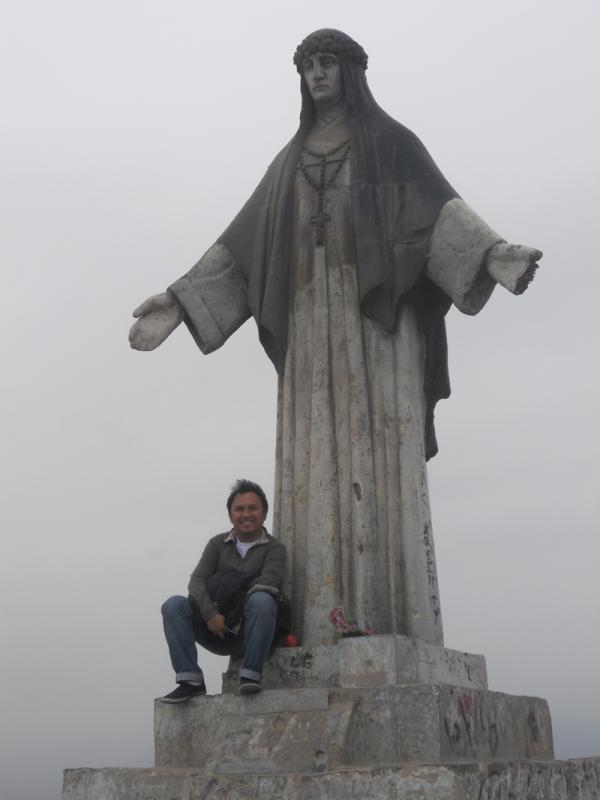
The author is a member of the Missionary Society of St Columban and is currently in Peru on his two-year First Missionary Assignment (FMA) as part of his preparation for the priesthood. He is from Cagayan de Oro City, Philippines. He went to Peru in 2014. This is the first part of his article. The second and final part will appear in the November-December issue.
The popular quotation, ‘A journey of a thousand miles begins with a single step’, penetrates into my consciousness when I think of my formation as a Columban since I entered the seminary in June 2007. This is exactly what my journey is all about – from a well-discerned decision to say ‘Yes’ to God’s invitation to the missionary priesthood to a daily commitment to the whole formation process. Those years of self-discovery, self-acceptance and self-giving in the formation program made me firm in my decision to continue and face another stage: my First Missionary Assignment (FMA).
WHERE AN ENCYCLICAL HITS THE NAIL ON THE HEAD
HONG KONG (SE): One of the criticisms directed against the recently released encyclical penned by Pope Francis entitled Laudato Si’: On care for our common home, is that he does not adequately take the ingenuity of the human being into account.
But the type of ingenuity displayed by logging and mining companies on the southern Philippine island of Mindanao that uses every trick in the book to get around national laws designed to protect the environment is well recognized in his landmark work.
OUR HIDEAWAY
Mother and Daughter
By Therese Diane N. Germinanda
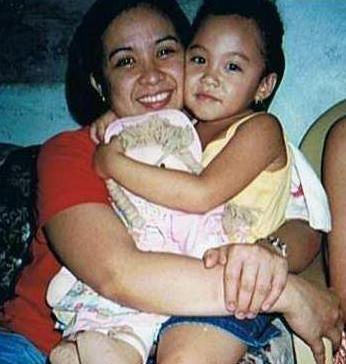
Therese as a child with her mother, Lyn
For nine months, she bore the pain but still smiled
Her happiness was visible the day I came into her life
She is sweet, very thoughtful and caring too
Whenever I’m sad she knows what to do.
I am blessed to have her around
She picks me up always whenever I’m down
She is the light of our home and my life
I love my mother until the day I die
PEACE BY PEACE
Sincerely I learned about her, and ungrudgingly do I share—
|

YOUR TURN

Pope Francis with Eucharistic Youth Movement
7 August 2015
On Friday 10 August this year Pope Francis met with members of the Eucharistic Youth Movement from many parts of the world. He listened to questions from Magat Diop born in Italy of Senegalese parents, Gregorius Hanzel from Indonesia, Ana Carolina Santos Cruz from Brazil, Pin Ju from Taiwan, Louise Courant from France and Agustin Aschoff from Argentina. The full transcript of the audience can be found on the website of Zenit.org.